
Rimi Tadu
Documentation of Yugyang in Apatani Society
Apatani Community
Lower Subansiri District, Arunachal Pradesh, India
Rimi Tadu is documenting the cultural and ritual significance of yugyang among the Apatani community of Arunachal Pradesh. Yugyang are sacred peach trees associated with specific Apatani clans. Each clan maintains its own yugyang, and it is at this location that the clan performs many of its important rituals. These trees therefore serve as enduring ritual centres that connect clan identity, landscape, and ceremonial life.
The importance of peach trees has recently received wider scholarly attention. In a study published in Quaternary International, Guillaume Jacques and Charles Stevens (2024) highlight the particular significance of peach trees in the early cultural history and movements of Sino-Tibetan populations. Rimi’s project thus represents a compelling instance where community-driven documentation intersects with broader academic research, allowing insights from local knowledge systems to inform larger historical and linguistic questions.
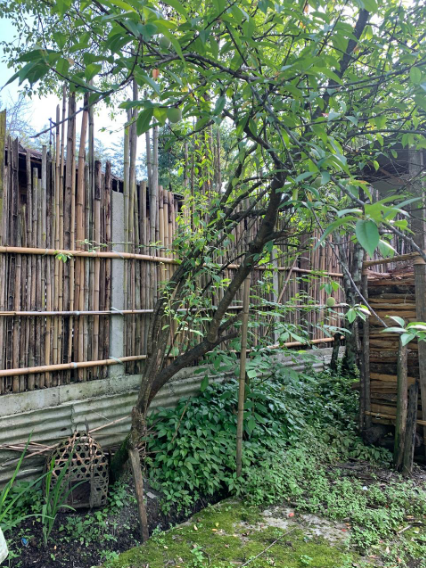
Yugyang of Tadu village, Lower Subansiri District, Arunachal Pradesh.
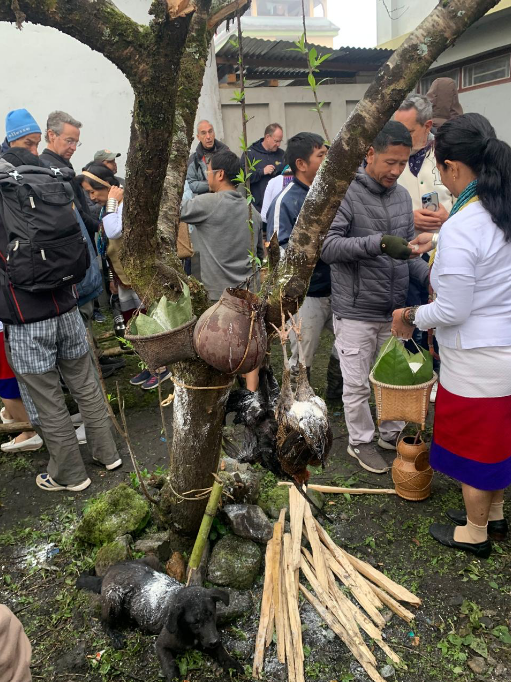
Yugyang of Hibu village. This photograph was taken during Myoko, the spring festival celebrated by the Apatani community in the month of March (Myoko Pwlo). Alongside the Myoko babo (ritual poles) and nago (community shrines), the yugyang is regarded as an enduring symbol of Apatani Tanii cultural life. This image captures the ritual event known as Alyi Lalonii—the bringing of a pig to receive blessings prior to sacrifice—and Supung, both of which take place early in the morning at the clan’s yugyang. These rituals form part of the broader ceremonial cycle of Myoko, which emphasizes communal harmony, agricultural well-being, and spiritual continuity.