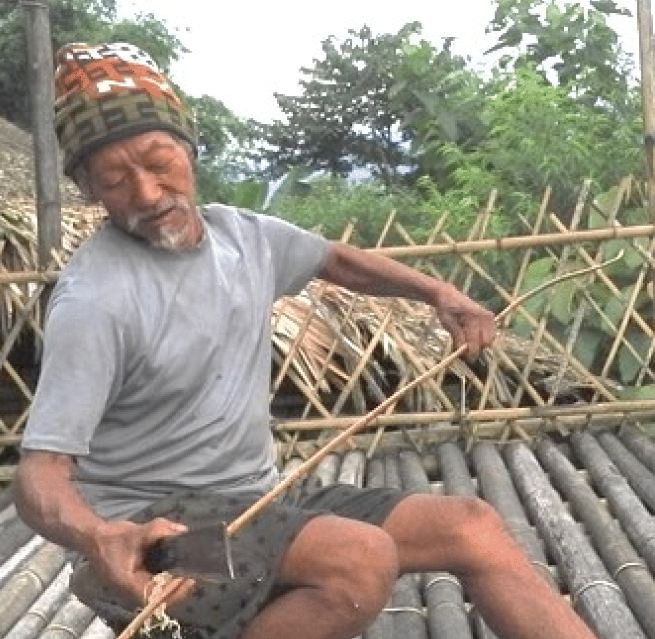
Nyaton Kitna
Documentation of Traditional Dyeing Practice of the Tutsa Community
Tutsa Community
Tutnu village, Tirap District, Arunachal Pradesh, India
Nyaton Kitna, a native of Tutnu village, Tirap District, Arunachal Pradesh, aims to document the traditional dyeing methods used for Tutsa attire in Tutnu (the mother village of all Tutsa villages), Kolam, Nogna, and Thungjang. These garments, headgears, waist belts, and earrings, known for their vibrant reds, greens, whites, and blues, are a core marker of Tutsa cultural identity and reflect the creativity and skill of earlier generations. The project will focus on indigenous techniques such as dyeing white goat hair red with plant-based dyes for headgears and arm bangles, and turning orchid stems yellow for female headgears.
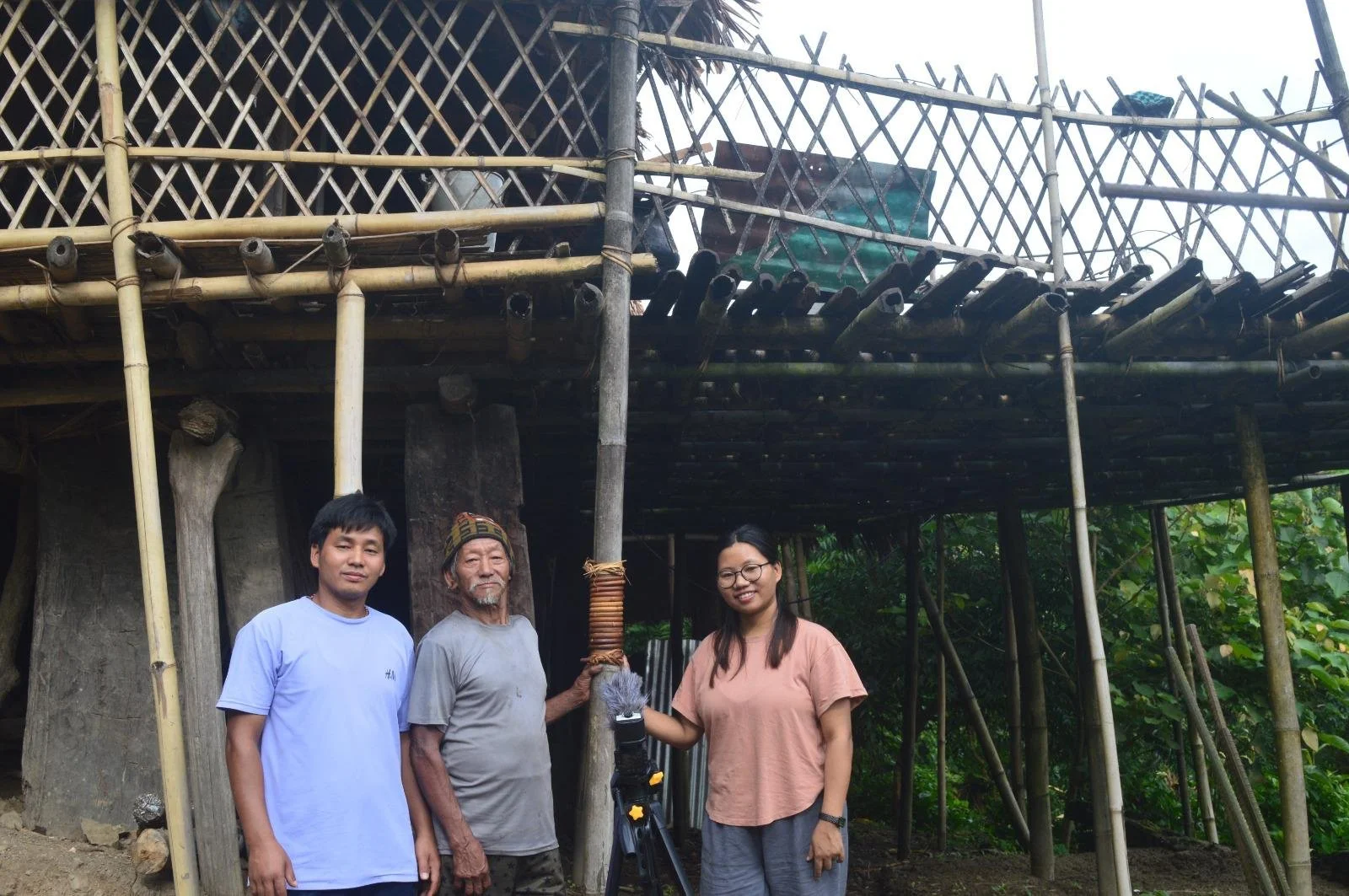
The process of making a local waist belt from cane which is wrapped around a bamboo post that supports the raised house. The spiral cane is later removed and dyed with plant bark and seed coat of a specific climber plant which involves a tedious process that can take up to a year. The picture was taken at Tutnu village on 15 April 2026. Mr. Ngongsam Kitnya, a field assistant, Mr Telan Diwen, the artist of the waist belt, and Nyaton Kitnya, a FLICR fellow (From L to R). The wrapped cane around the bamboo post is the first step in the waist belt preparation which is later smoked and dyed with colour for the long lasting preservation of the belt.
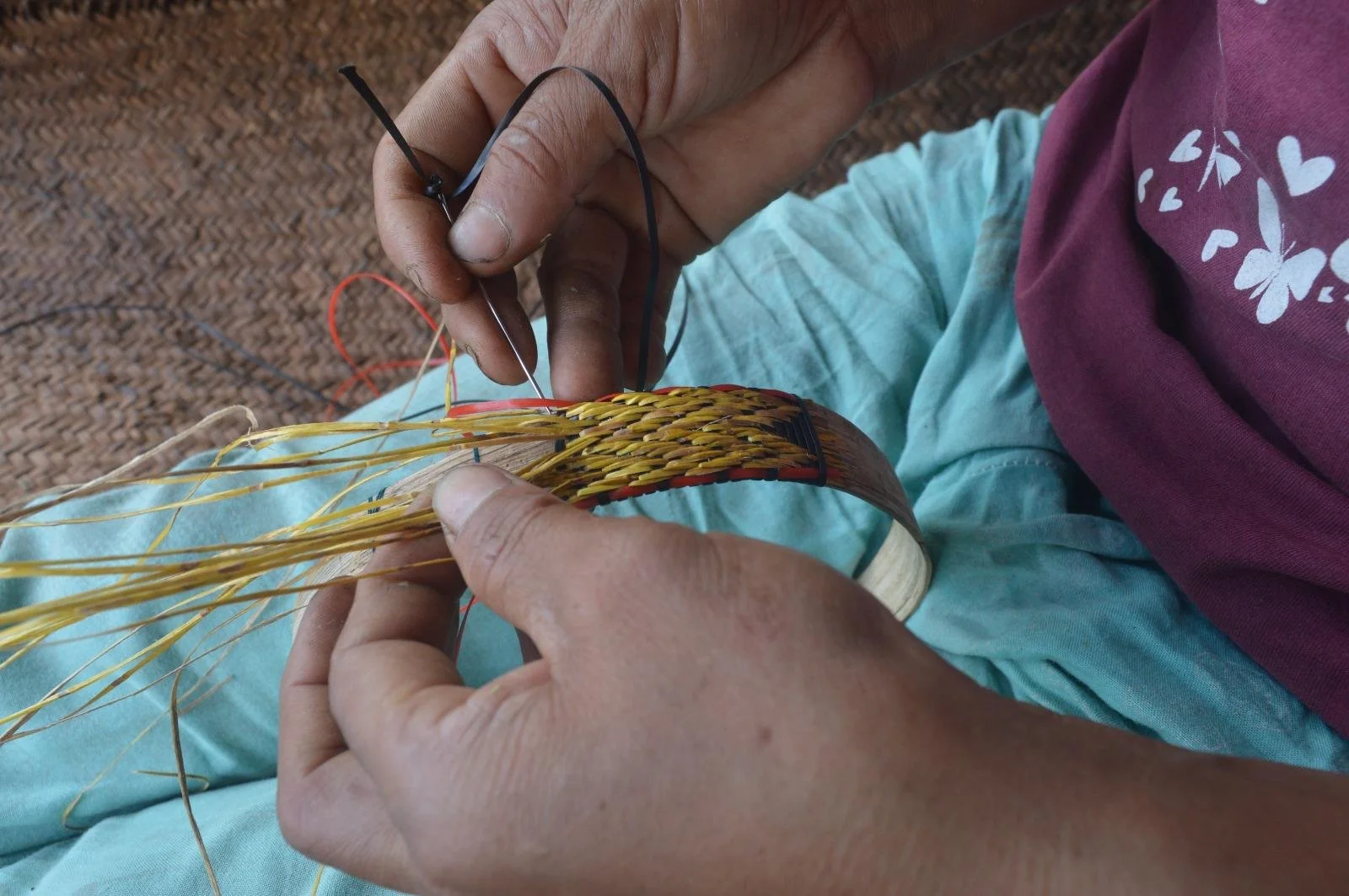
The woman named Mrs Chapong Kitnya is weaving traditional headgear for females. It is made of orchid stems which is turned into a yellow colour through a particular process and then weaved with cane thread dyed with red and black natural dyes. The patterns weaved mimic the tattoo patterns of a virgin female (which is no longer practiced today). This image was taken on 20th April 2026 at Tutnu village.
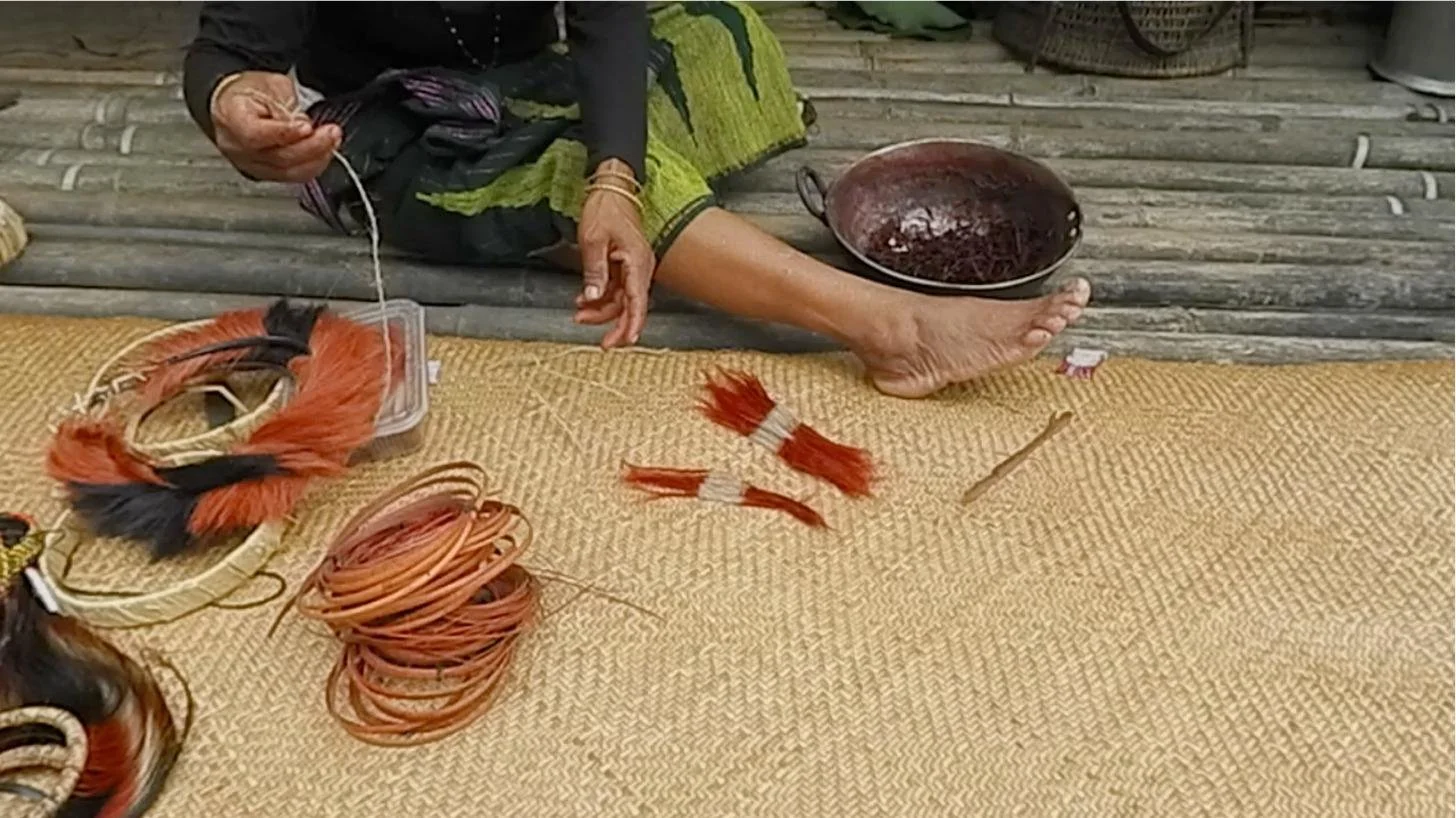
This image demonstrates the natural red dye from the stem and roots of a creeper plant which is used to dye white goat hairs, cane threads etc... These are dominantly used by Tutsa community as a part of traditional attires for both males and females during Pongtu festival, a major festival of the community. The lady in the picture is named Mrs Mitsan Kitnya, who is in the middle of the dyeing process. She is one of the very few people who still has the knowledge of this particular natural dyeing practice.